






root@node-c2:~# cd /about
ABOUT THIS GAME
A hacking simulation disguised as an operating system. A spiritual successor to Uplink (2001), built for the players who wanted to go deeper.
BOOT SEQUENCE
THE TERMINAL DOESN'T CARE
You boot into a system that was never meant to be yours. A cursor blinks. A handler called Vane guides your first intrusion, then vanishes, leaving you alone with a live network and every log you forget to wipe.
NODE: PROTOCOL is a hacking simulation disguised as an operating system. Every window, every app, every file on screen exists inside the fiction, a custom OS built for one purpose: anonymous network intrusion.
You are a Neural Operator, a ghost in a world of 250+ live domains: 91 corporations, banks, governments, and criminal syndicates, all connected to a network you can map, probe, and tear apart from a command line. The network is an open world: roam it at will, pick your own targets in any order, and take contracts or follow the story only when you want direction.
Scan ports. Research real CVEs. Pop shells. Escalate privileges. Pivot through LANs. Intercept cell traffic. Redirect SWIFT wire transfers. Take part in ATM jacking. Clean your logs, or don’t, and watch federal investigators trace you back through every server you touched.
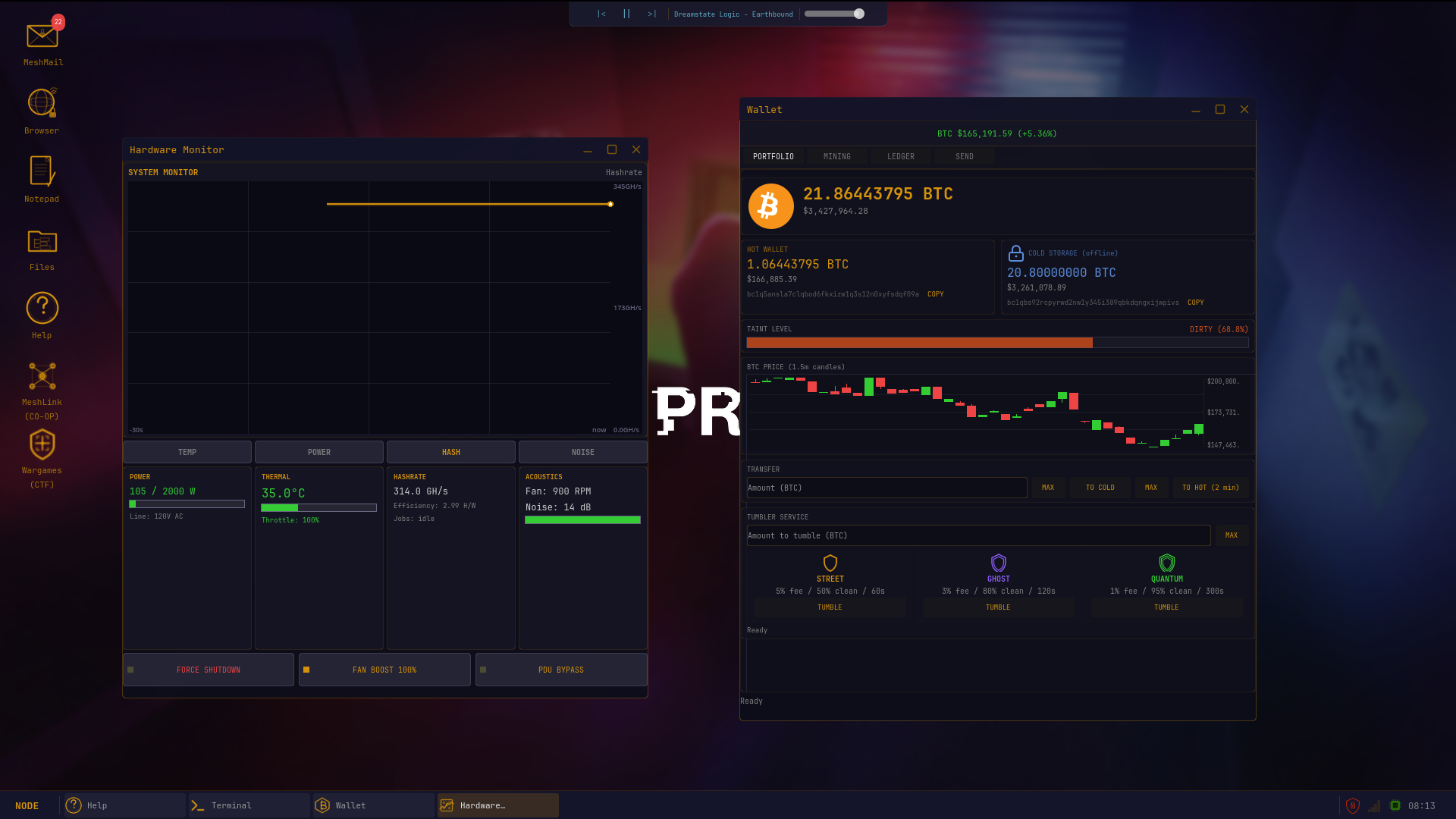
Your hardware is a physics simulation. Thermals spike. Breakers trip. Fans scream loud enough to give you away. Bitcoin prices swing between 20k and 200k while your miners run on stolen servers. Every connection leaves a trace. Every trace has a clock. Getting raided isn’t game over, but you’ll feel it.
“Uplink was the beginning. This is THE endgame.”
FEATURE MANIFEST
KEY FEATURES
98+ terminal commands
Recon, exploitation, privilege escalation, stealth, IoT manipulation, social engineering, SIGINT, economy.
Realistic exploit pipeline
scan → searchsploit → metasploit → connect, gated by 106 real CVEs.
Hardware as physics
4Hz thermal/power/noise simulation. Your rig overheats, breakers trip, fans give you away.
Wallets & SIM cloning
Crack bitcoin wallets, or intercept logins via IMSI catching, clone SIM cards and get away.
Volatile Bitcoin economy
Prices swing 20k–200k. Mine, tumble, launder, or gamble at the in-world crypto casino.
33 mission types
Data theft, blockchain forensics, hotel WiFi pineapple ops, SWIFT wire fraud, ATM cashouts, social engineering recruitment, USB postal delivery.
5+ rival NPC hackers
Compete for targets, escalate to war, can be permanently eliminated.
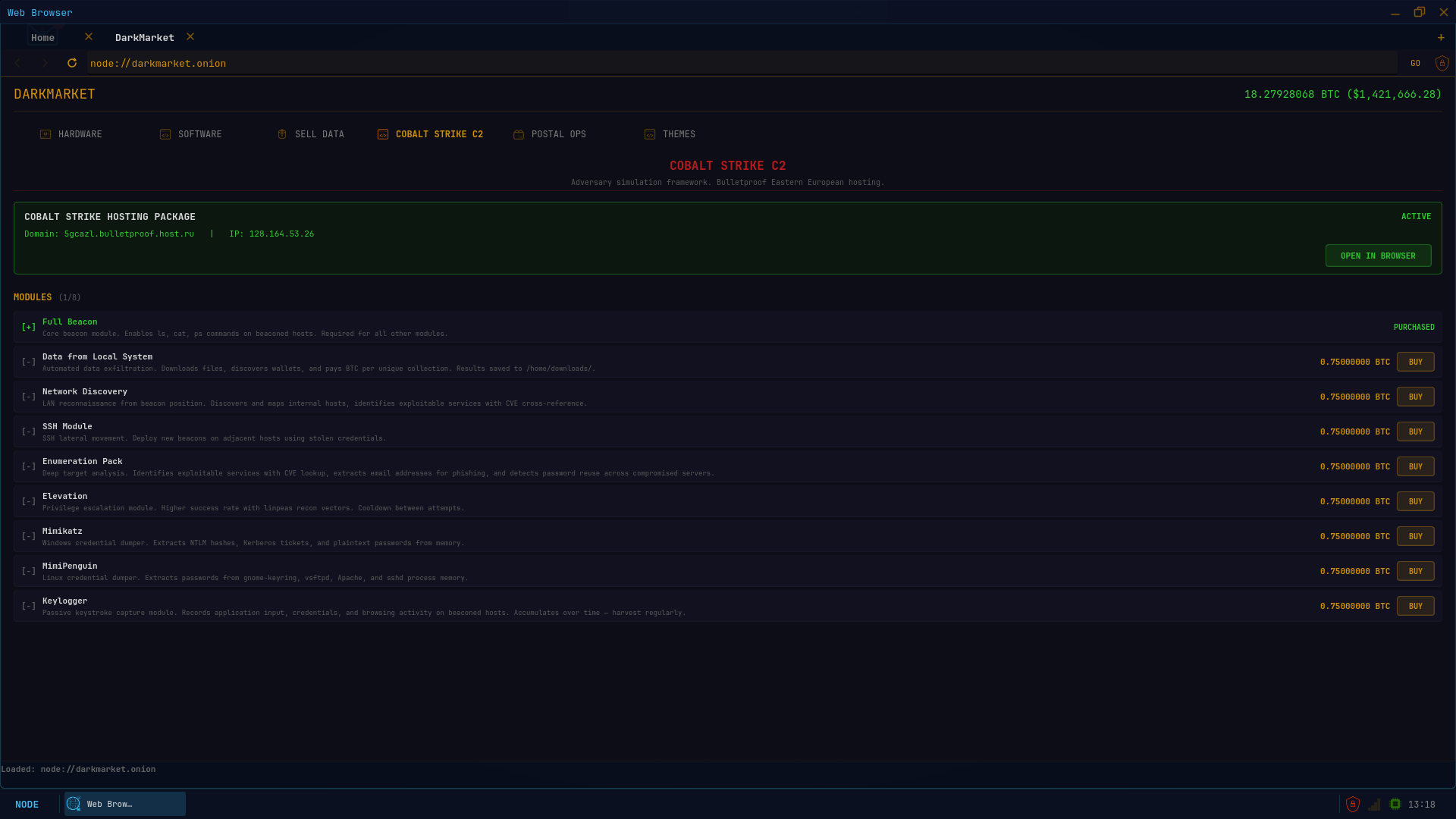
Cobalt Strike C2
Deploy beacons, phishing campaigns, postal USB delivery with interception risk.
SIGINT interception
IMSI catching, phone exploitation, MFA, SIM cloning, interception across 10 world cities.
Botnet & DDoS
Infect servers, run booter services, trigger world-state modifiers.
15 safehouses
Each with unique effects on hardware, trace speed, and raid protection.
Darknet browser
15+ in-world sites: marketplace, casino, social media OSINT, blockchain explorer, crypto exchanges.
SYSTEM INVENTORY
INSIDE THE SIMULATED NETWORK*
Every target is a real stack you have to get through: the operating systems you breach, from today's servers to decades-old legacy machines, the shells you land in, the gear you pivot through, and the defenses watching you do it.
Operating systems
7- Windows 7
- Windows 10
- FreeBSD
- Debian Linux
- CentOS
- AIX
- Cisco IOS
Legacy systems
10- Solaris 8
- IRIX 6.5
- OpenVMS
- NetWare 6.5
- AS/400
- Windows NT 4.0
- Windows 2000
- SyncServer S650
- FreePBX
- Lantronix ETS
Command shells
19- Linux
- Windows (CMD + PowerShell)
- iOS
- Cisco IOS
- MikroTik RouterOS
- OpenWrt
- UniFi OS
- Citrix NetScaler
- pfSense
- Solaris
- IRIX
- OpenVMS
- NetWare
- AS/400
- Windows NT 4.0
- Windows 2000
- SyncServer
- Asterisk
- Lantronix
Mainframe & banking CLIs
3- AIX mainframe
- SWIFT wire transfers
- BASE24 ATM
Switches & routers
5- Cisco Catalyst 2960
- Cisco IOS-XE 17.6
- Catalyst 8200
- ISR 4000
- ASR 1000
Firewalls & gateways
7- Fortinet FortiOS
- pfSense
- F5 BIG-IP
- HAProxy
- Citrix NetScaler
- Squid
- Nginx
Defenses & agents
6- Suricata IDS/IPS
- Splunk Enterprise SIEM
- Cisco Firepower NGIPS
- Cisco Secure Endpoint
- Elastic filebeat
- syslog-ng
Honeypots
3- Deception servers
- Canary beacon files
- INTEL-BEACON- marker
VLAN segmentation
1- Isolated VLANs
* In the game, operating systems, devices and companies have fictional names. Real product names on this site describe what they are modeled on. NODE: PROTOCOL is not affiliated with or endorsed by their makers; all trademarks belong to their owners.
MULTIPLAYER
CO-OP FOR 2–4 OPERATORS
Form a crew, share a hacking session, and pull off operations no solo operator could attempt.
Co-op is not included in the free demo.
Shared hacking state
Every exploit, cracked password, and discovery syncs to the entire crew in real time.
Crew operations
Multiplayer-exclusive breach missions that scale by crew size: bigger networks, harder objectives, up to 6x solo payouts.
Objectives that demand coordination
Root all LAN devices, exfiltrate target files, clean every log. Detection escalates the longer you’re inside.
Individual performance bonuses
First blood, root bonuses, clean sweep rewards. Everyone contributes, standouts get paid.
MeshLink crew interface
Lobby, real-time IRC chat, operation tracker, crew roster. All diegetic, no overlay menus.
Voice chat
Built-in push-to-talk voice comms.
Host migration
If the host drops, the lowest-index peer takes over. State snapshots every 30s ensure nothing is lost.
Crew heat
Each player has individual heat. Weighted crew heat means the worst offender drags everyone closer to a raid.
SCREEN CAPTURES
SCREENSHOTS
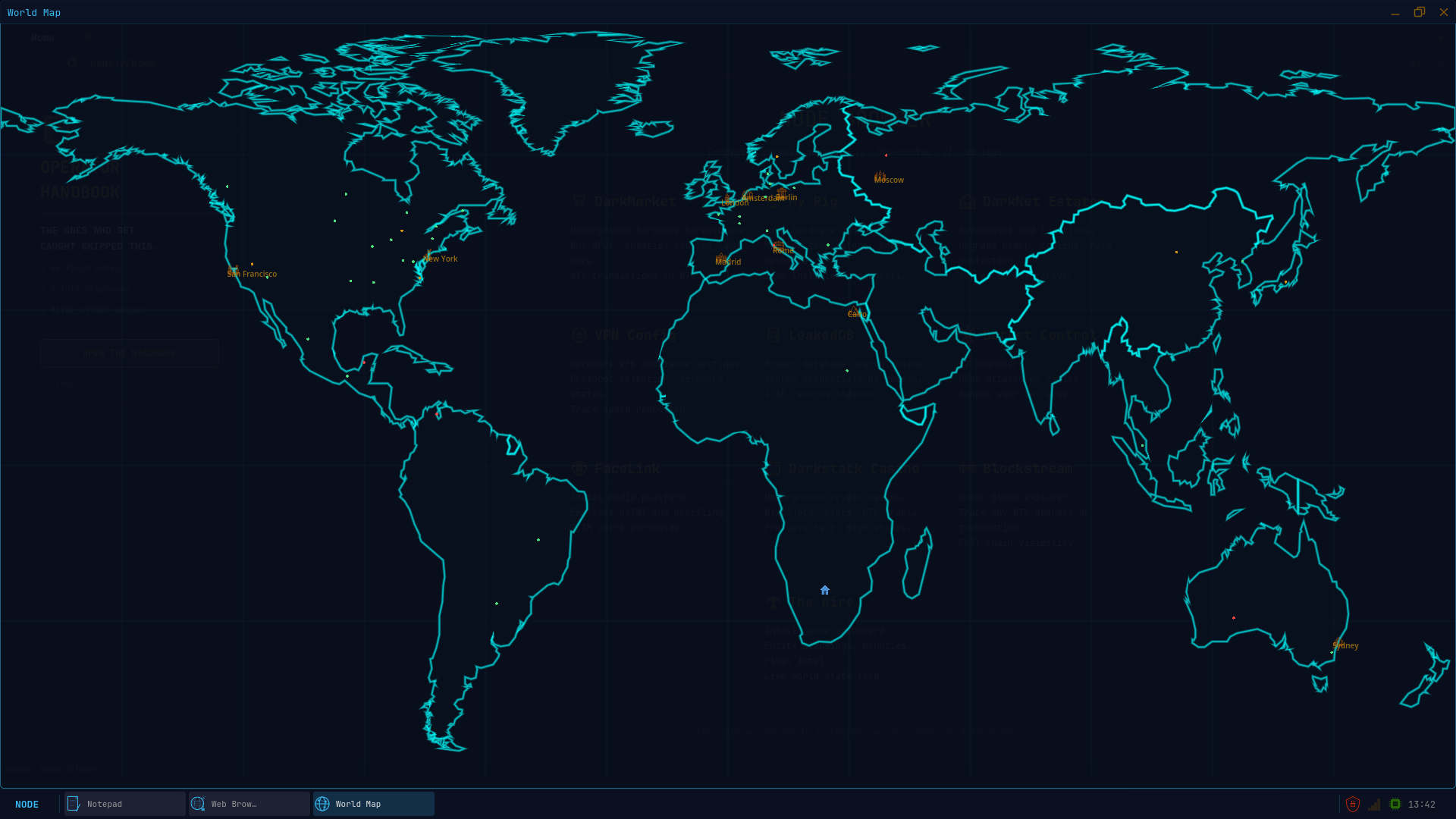
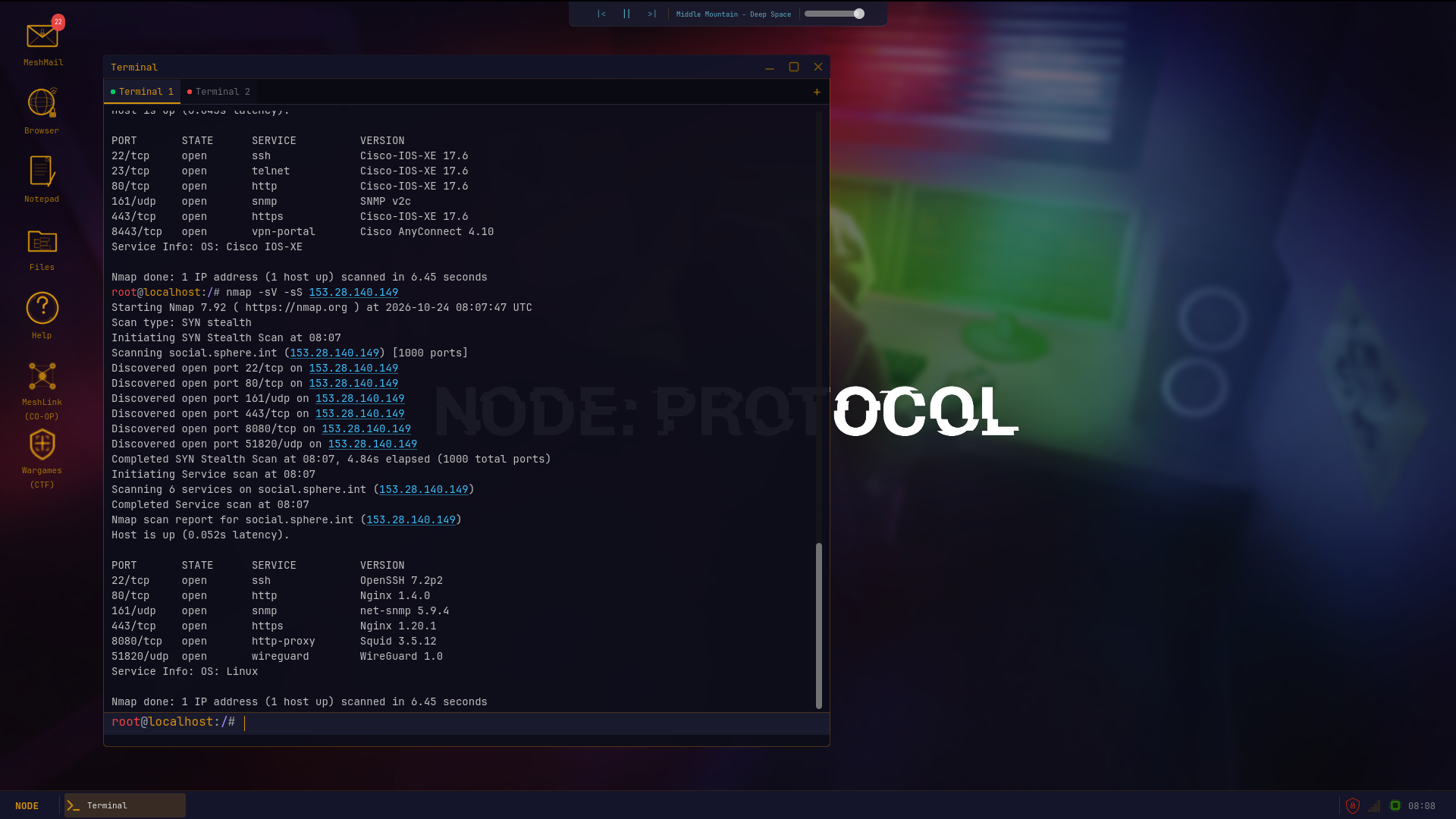
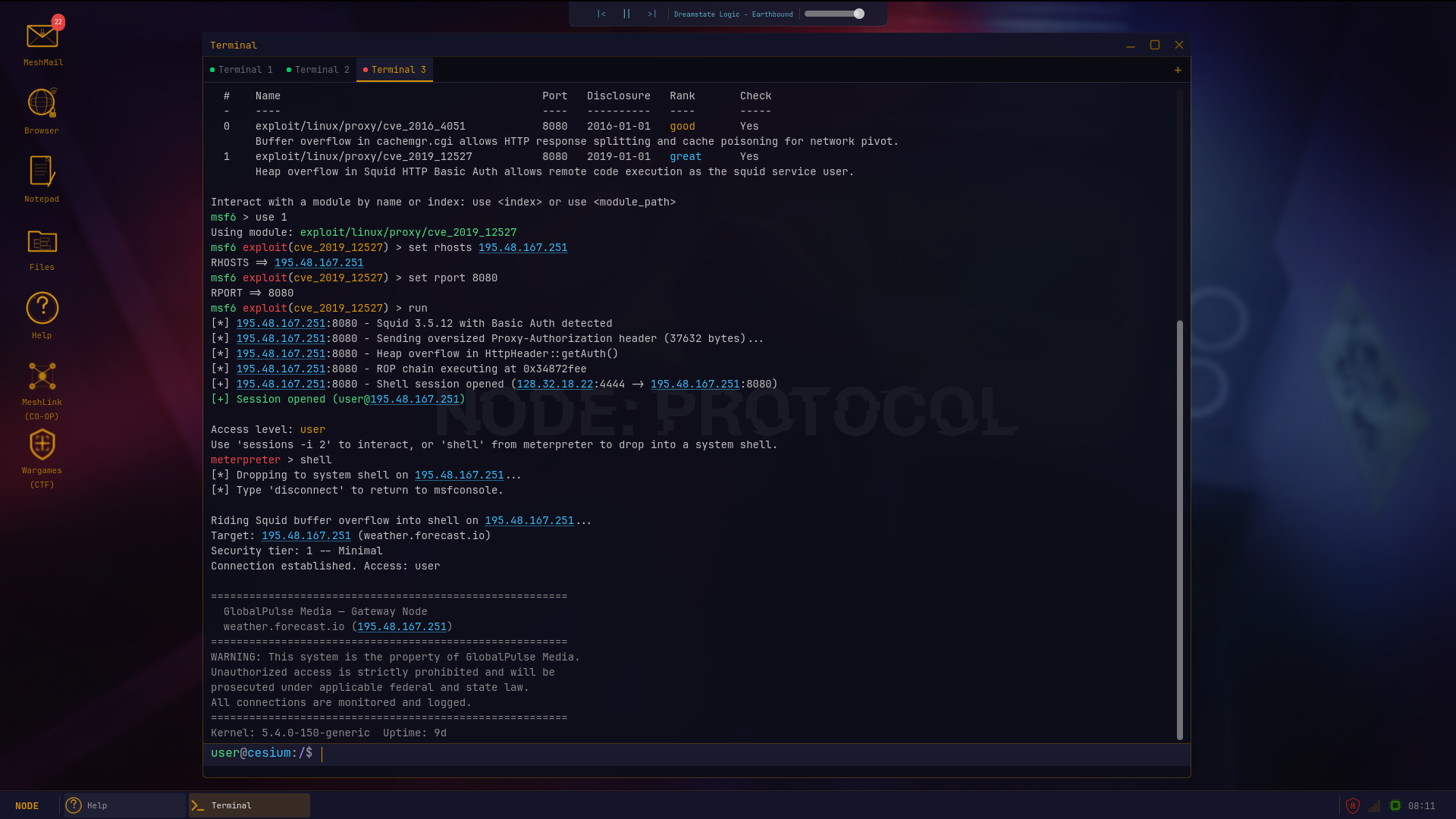
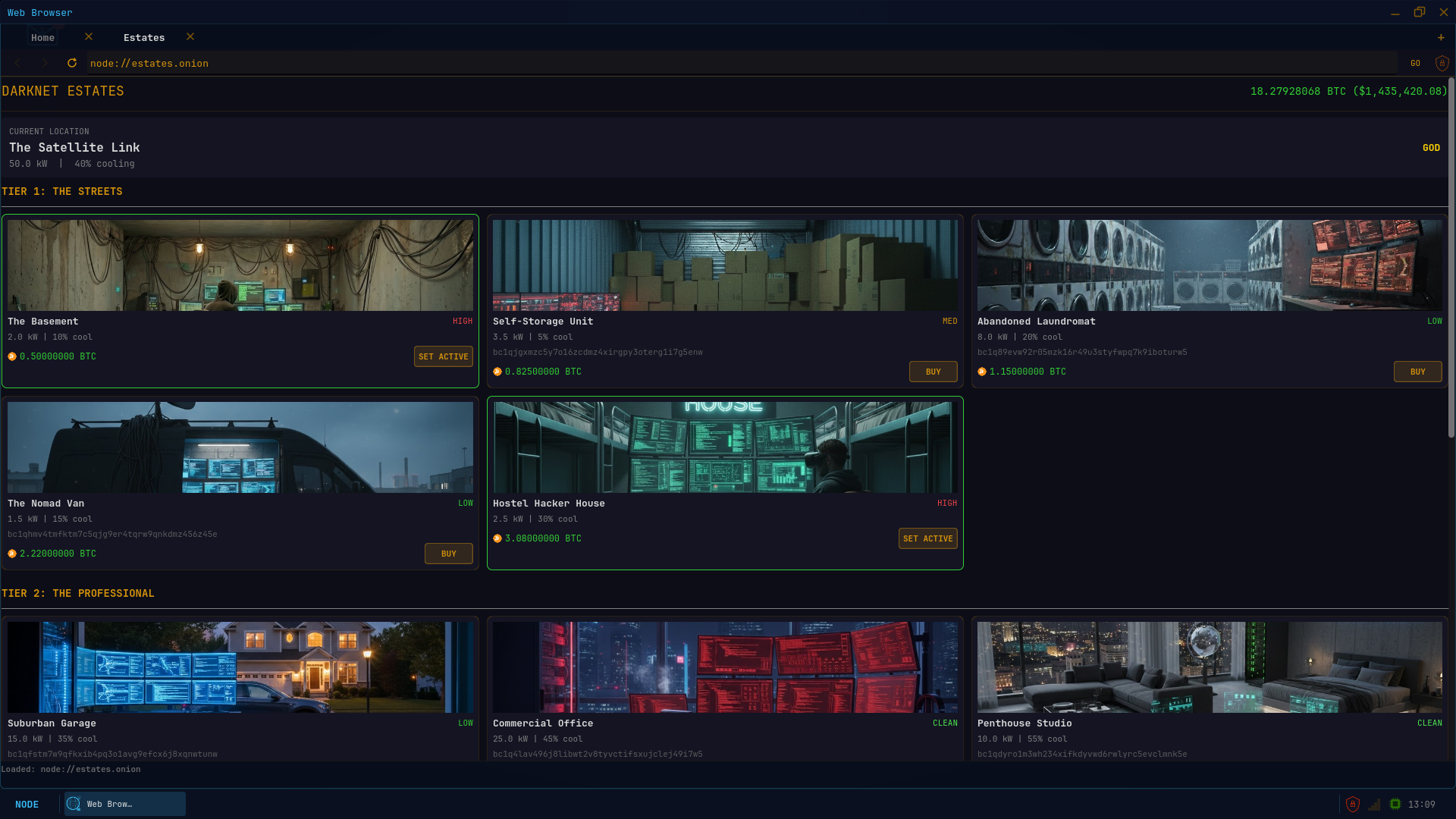
HARDWARE CHECK
SYSTEM REQUIREMENTS
- OS
- Windows 7+
- Processor
- i5+
- Memory
- 1 GB RAM
- Graphics
- No GPU required
- DirectX
- Version 9.0
- Network
- Broadband Internet connection
- Storage
- 2 GB available space
- OS
- Ubuntu 13.4 LTS
- Processor
- 2.0 GHz
- Memory
- 1 GB RAM
- Graphics
- OpenGL 3.0+ (2.1 with ARB extensions)
- Network
- Broadband Internet connection
- Storage
- 2 GB available space
FAQ
QUESTIONS
What is NODE: PROTOCOL?
NODE: PROTOCOL is a realistic hacking simulation by Calima Systems, played inside a custom operating system. You scan with Nmap, exploit 106 real CVEs with Metasploit, pivot through a living network of 250+ domains and clean your logs before federal investigators trace you back. Play solo, in 2–4 player online co-op or in CTF wargames up to 6v6.
When does NODE: PROTOCOL come out?
It is out now: Early Access launched on Steam on 23 November 2026. The full release date has not been announced yet. The free demo is still available.
Is there a free demo?
Yes, the free demo is available on Steam now. It was part of Steam Next Fest in October 2026. Co-op is not included in the demo.
Is it single player or multiplayer?
Both. Explore the open world and the story alone, team up in 2–4 player online co-op with shared hacking sessions, or compete in CTF wargames up to 6v6.
Which platforms is it on?
NODE: PROTOCOL is on Steam for Windows PC, Linux and macOS.
Do I need hacking experience to play?
No. Your handler Vane walks you through your first scan, exploit and log clean, the in-game Operator Manual explains every tool, and an optional hint rail can suggest the next command when you are stuck. The depth is there when you want it.
Is it like Uplink or Hacknet?
It is a spiritual successor to Uplink (2001) with a terminal at its heart like Hacknet, but it goes further: real Linux commands with pipes, real tools such as Nmap and Metasploit, 106 real CVEs, hardware physics, 2–4 player co-op and CTF up to 6v6.
Who makes NODE: PROTOCOL?
NODE: PROTOCOL is developed and published by Calima Systems.